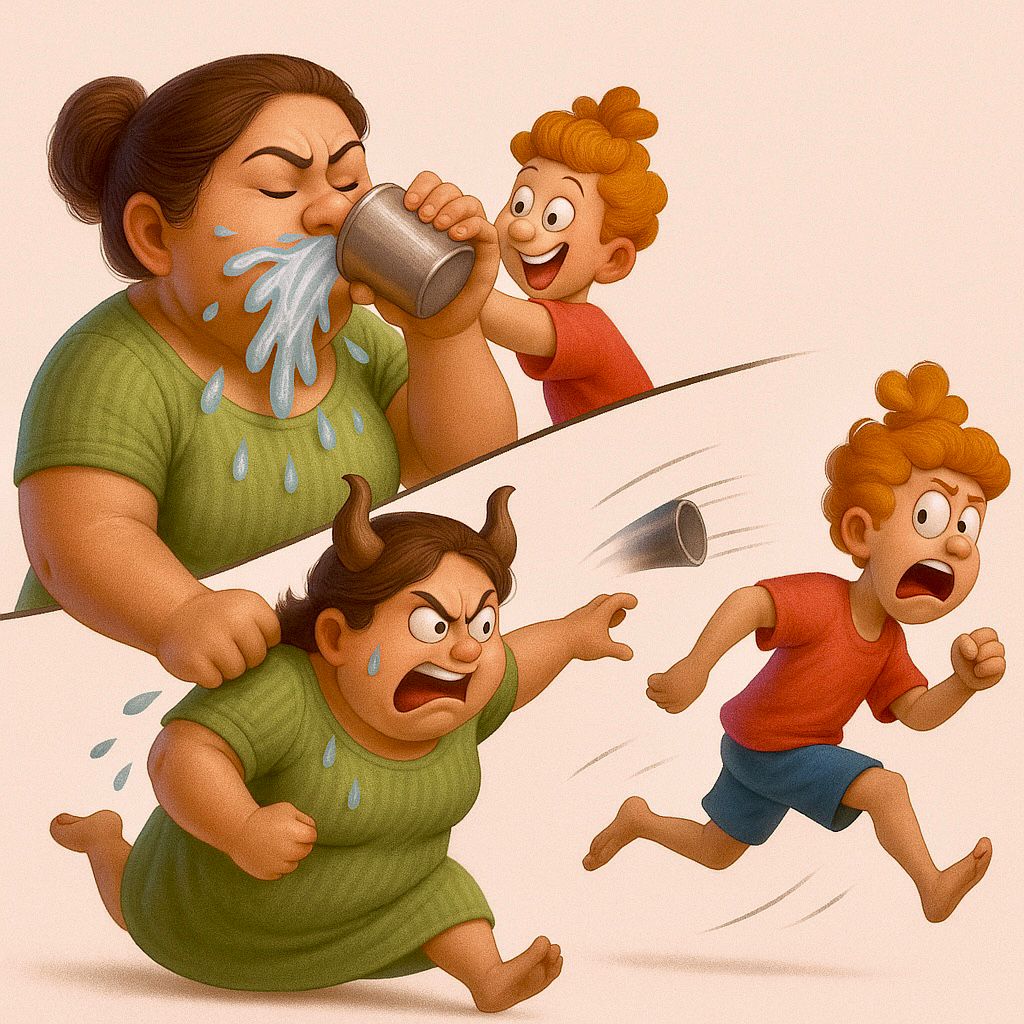
Students were tasked with illustrating a Hindi idiom, “आ बैल मुझे मार” (“Come, bull, hit me,” meaning to invite trouble) through two separate visuals: one literal and one figurative. Afterwards, they described their own illustrations via detailed prompts to generative AI (ChatGPT-4) to replicate the same images. The AI delivered aesthetically pleasing results but consistently missed the subtle interaction, like a child pushing a glass from below while a woman drank, which humans naturally depict using causal and spatial logic. This exercise highlights how AI lacks true comprehension of coordinated and intentional actions despite advances in image generation. However, Gen- AI tools will learn from their mistakes and our prompts, potentially reshaping the creative process of independently generating solutions versus asking for them.
- Home
- Portfolio
- Research papers
- Visualising Idioms
Visualising Idioms
ASSIGNMENT
Visualising idioms means turning sayings into pictures that show both their literal and implied meanings. The challenge is to make the idea clear so children understand them through pictures, while also capturing the idiom’s essence with creativity. It is about blending clarity, culture, and imagination into a scene you can see.
In this experiment, students illustrated the Hindi idiom “आ बैल मुझे मार” by first creating two images: one for denotation (literal meaning) and one for connotation (implied meaning). In the second phase, they reverse-engineered both images using text prompts to generate a similar image with generative AI. The goal was to see how well AI could match a human-made illustration showing complex, simultaneous actions.
HAND DRAWN RESULTS
Phase 1: Student-Created Visuals (No AI)
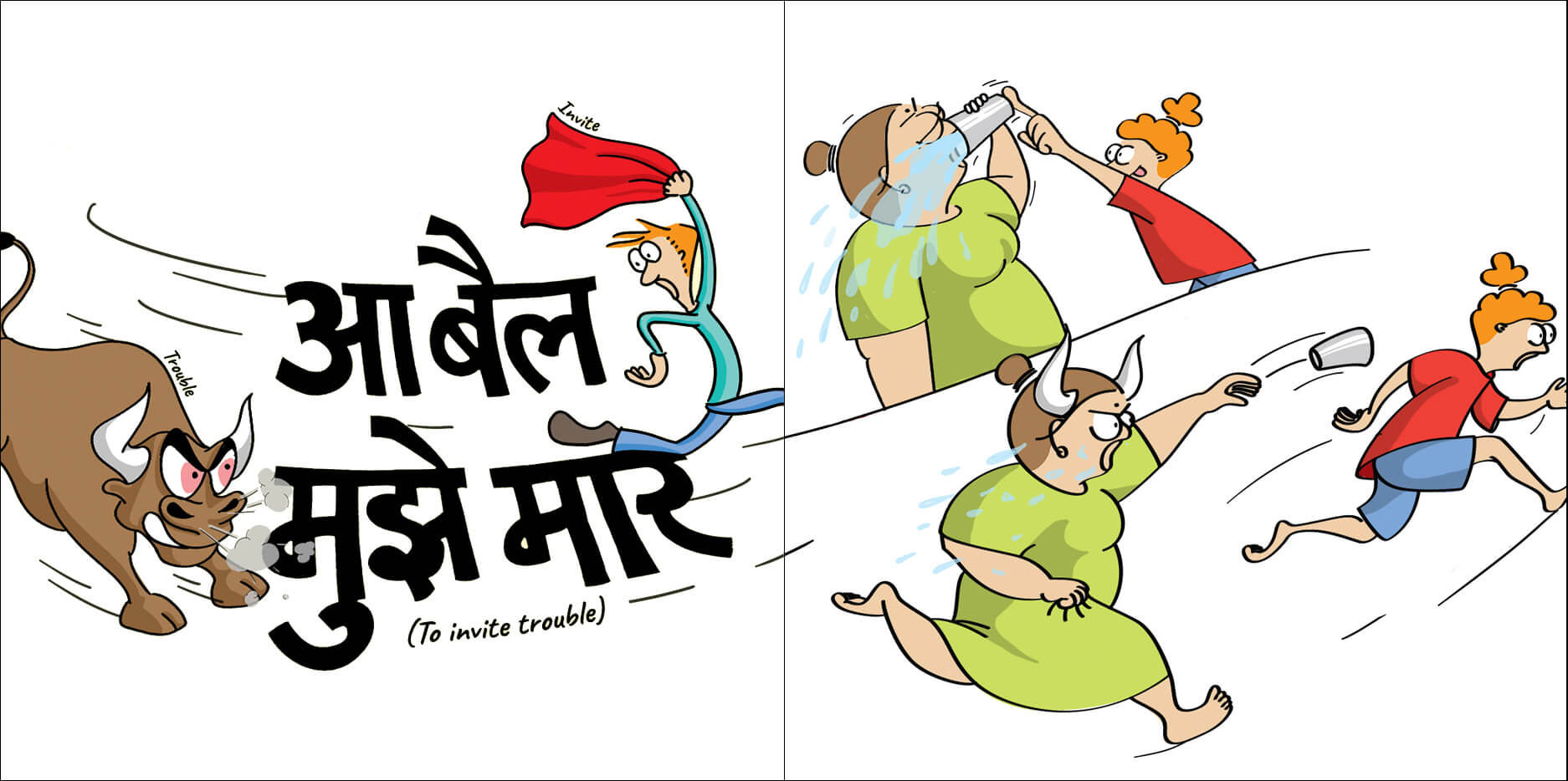
Fig.1: Illustrated by Divya Gagnani // Denotation - Come O Bull hit me. // Connotation - To invite trouble //. Gen-AI: ChatGPT4
GEN-AI TOOL RESULTS - CHATGPT 4
Phase 2: Reverse Engineering with Gen-AI
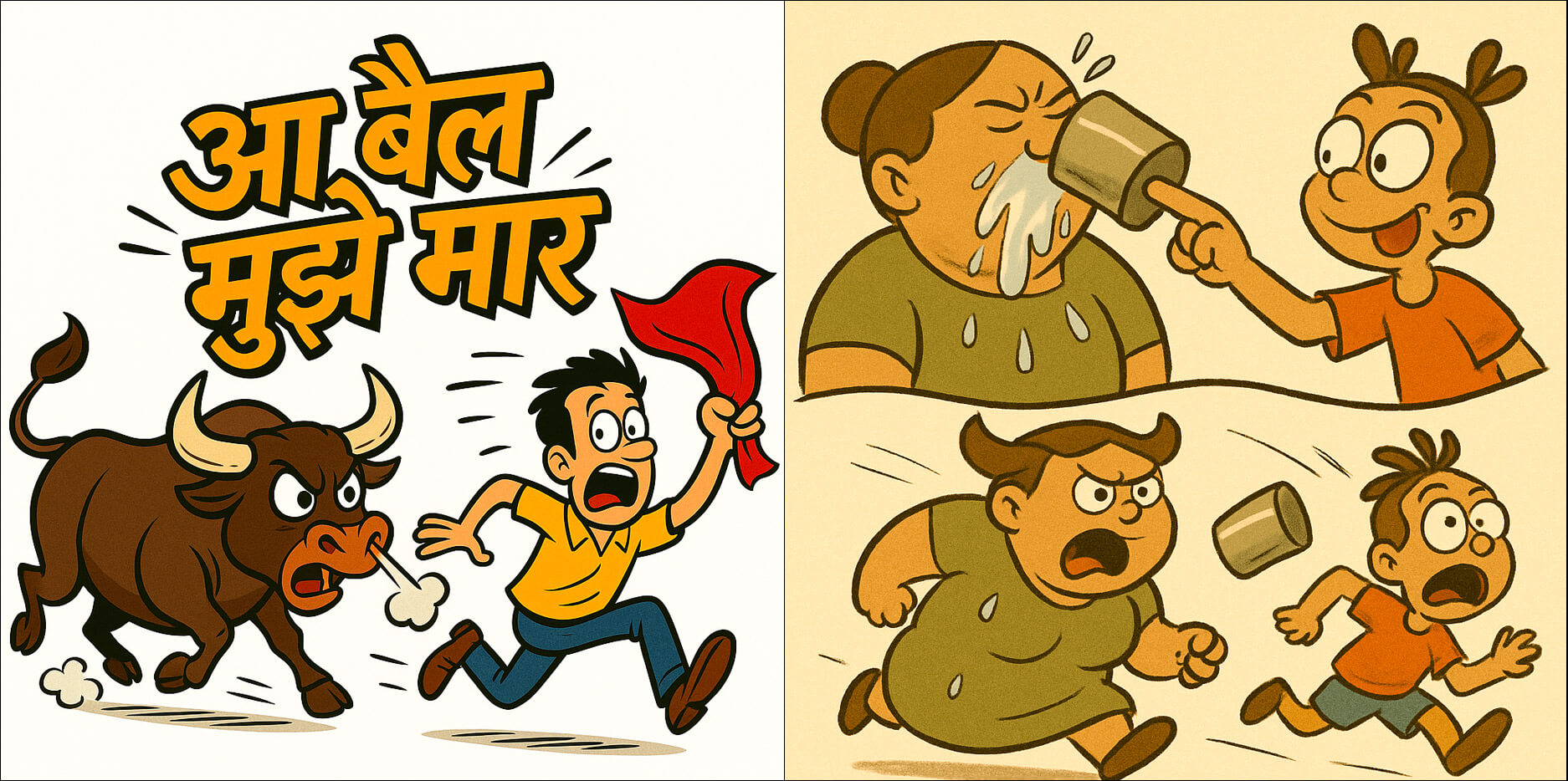
Fig.2: Gen-AI: ChatGPT4 generated images
“A picture is worth a thousand words... no wonder generating right picture with Gen-AI often requires those thousand words in a form of a well-crafted prompt”.
CONNOTATION - ITERATIONS THROUGH PROMPTS
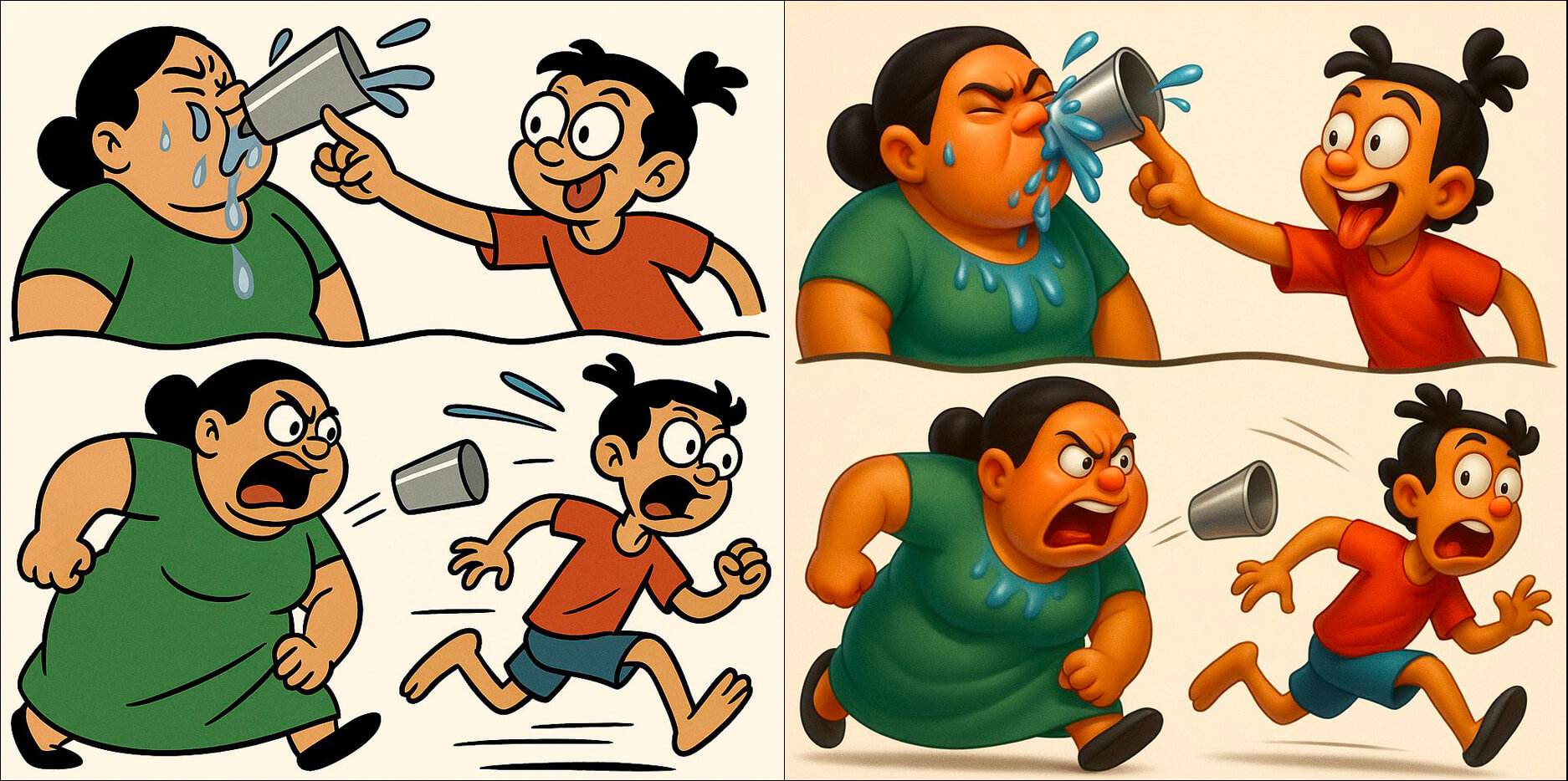
Fig.3: Gen-AI: ChatGPT4 //
Repeated attempts via rewriting prompts to get the right image
Repeated attempts via rewriting prompts to get the right image
While AI produced visually appealing results, it consistently failed to capture key moments, especially the coordinated scene of a woman drinking water while a child pushes the glass from below.
Humans naturally understand intention, causality, and body coordination, sequencing actions logically to tell a story. AI (Chatgpt 4), however, works by assembling elements from patterns in its training data without real comprehension. This leads to missing subtle but crucial relationships, revealing its difficulty in accurately portraying interdependent actions that require spatial awareness and physical logic.
If we isolate the action, ChatGPT 4 successfully renders it?
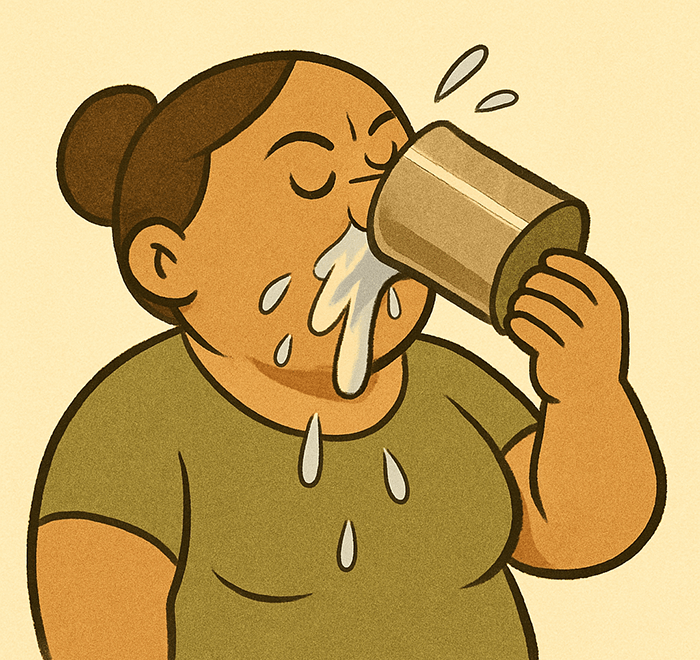
Did ChatGPT perform better with a reference image in comparison to the detailed text prompt?
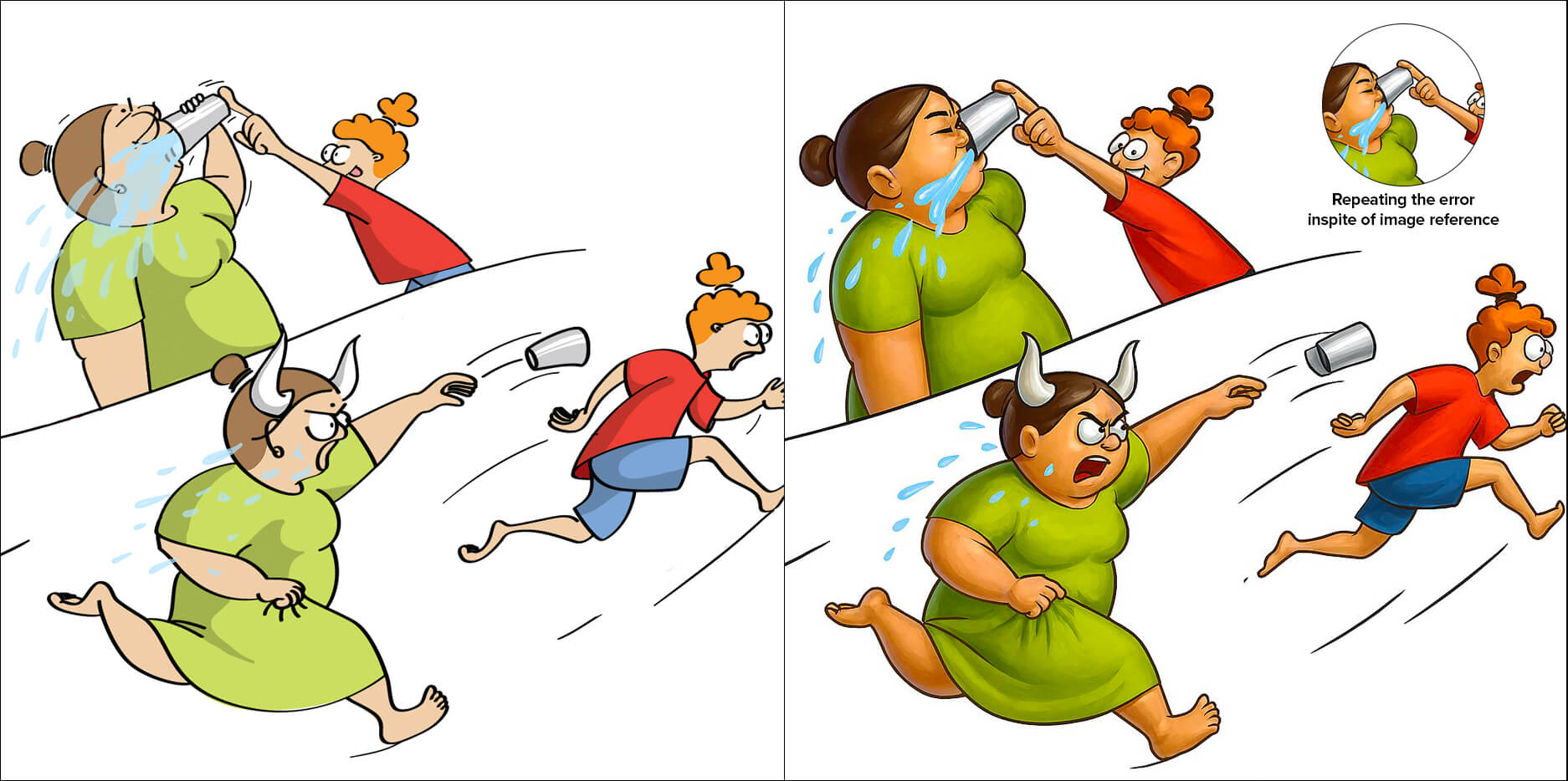
Fig 4. Using human-illustrated image as reference to generate the image // Gen-AI: ChatGPT4
How did Gemini fare?
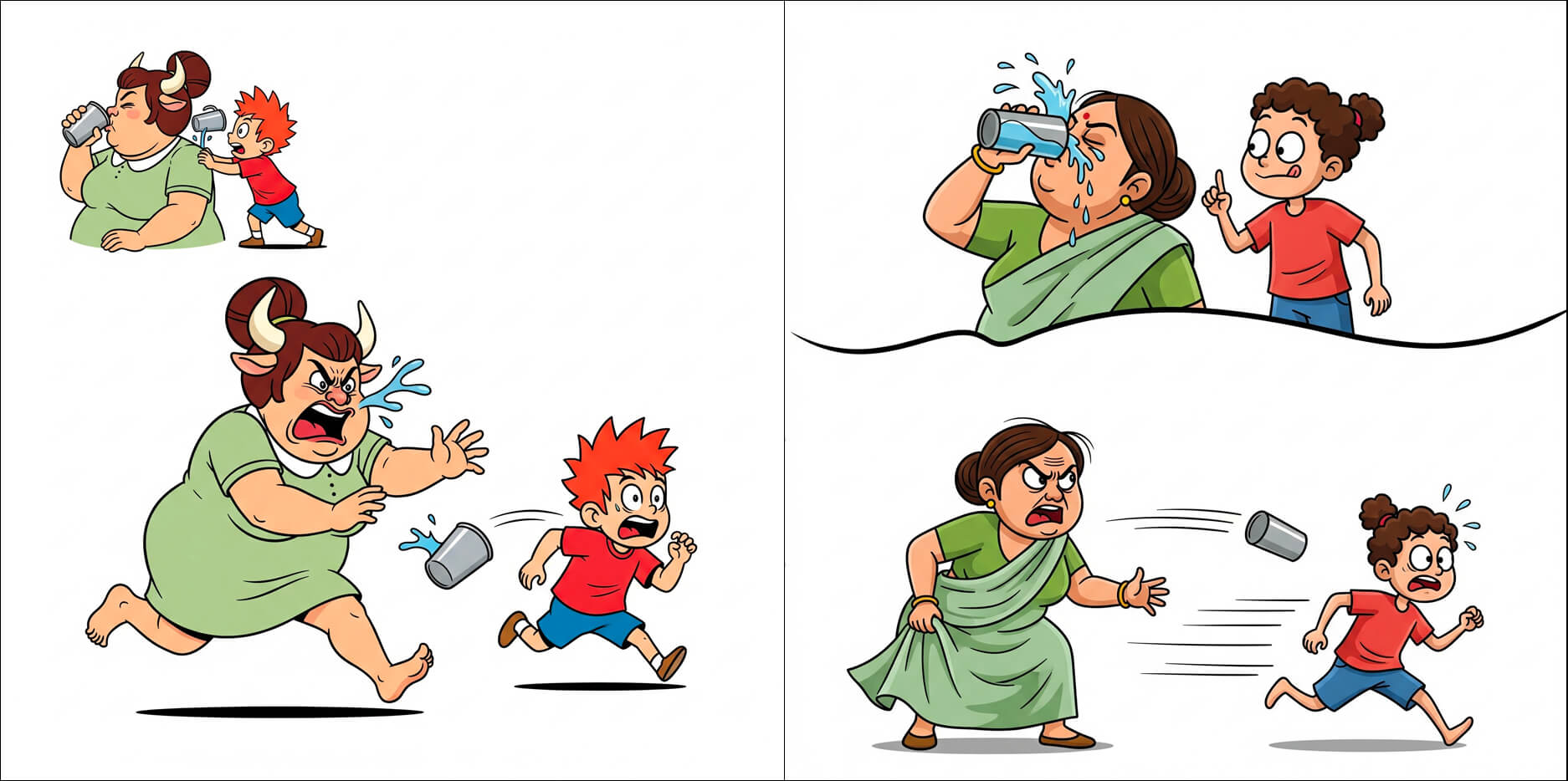
Fig 5. Results of Gemini with the similar prompt
We did try other Generative AI, like Gemini to find whether this particular action creates the problem. Still drinking and pushing the glass from bottom as a combination has failed.
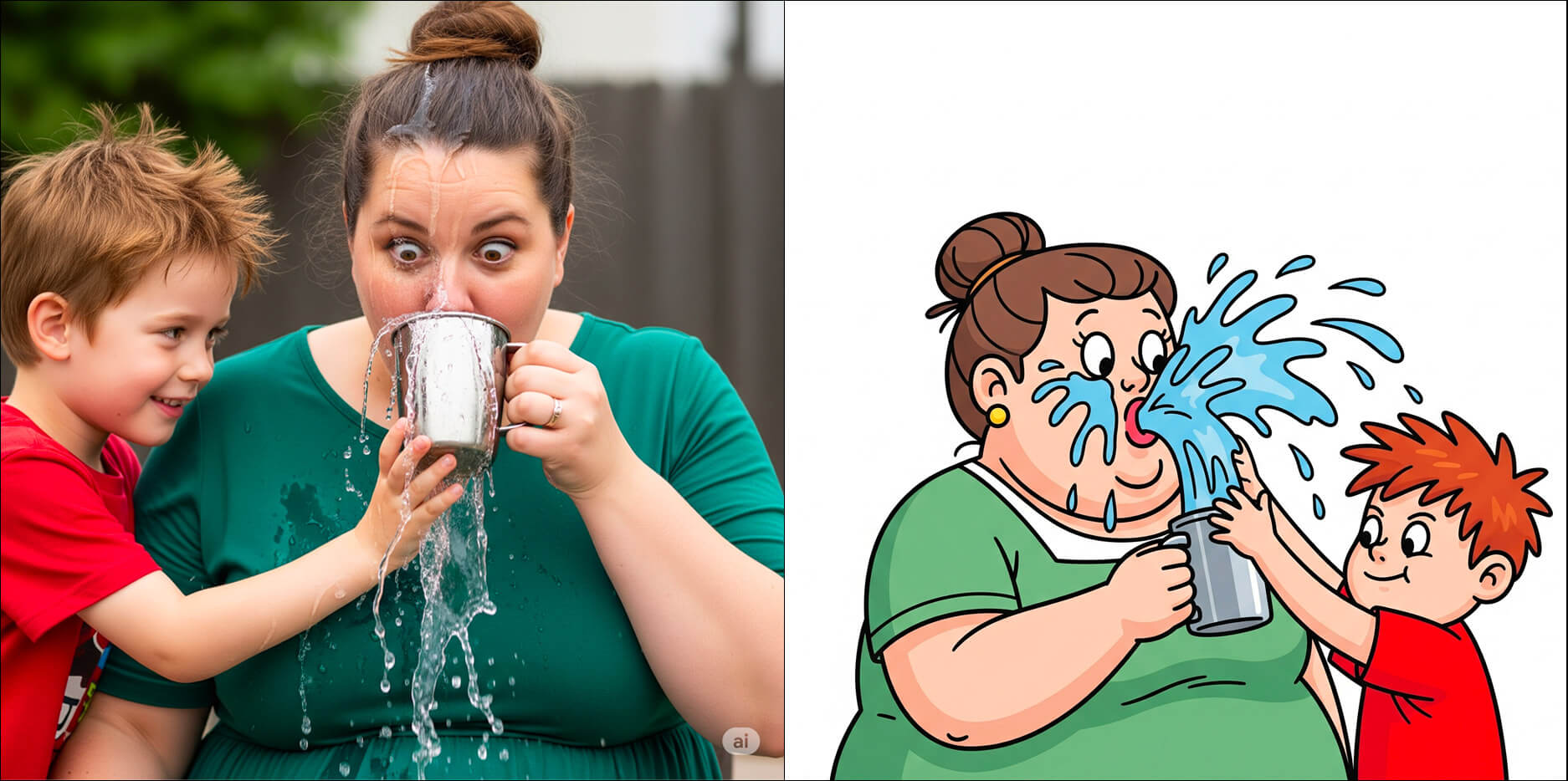
Fig 6. Results of Gemini attempting to prompt the action of drinking and push together.
How did ChatGPT 5 fare?
Fig 7. ChatGPT 5 results. This is still a quick-fix, the hand is not yet pushing the glass from the bottom, as desired.
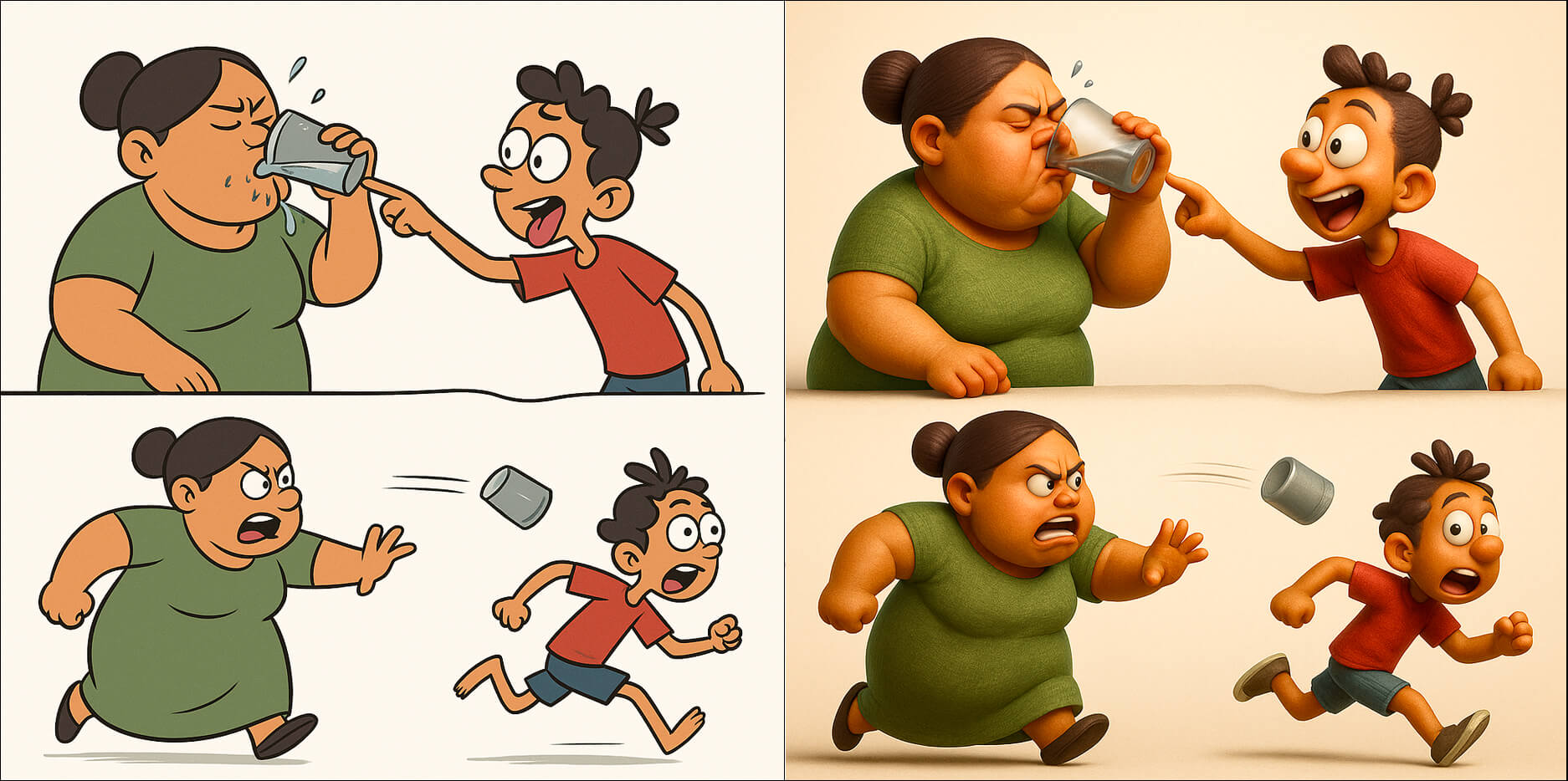
Fig 8. Results of ChatGPT 5 while additionally reminding it to show the lady drinking water. The push and the splash is not yet satisfactory.
It finally managed to do it, but still not to a satisfactory level. The push of the kid, the splash, the angle, and the details all need more refinement compared to the human drawing. See ( Fig.1 ) However, Gen-AI tools seem to be catching up very fast.
As Gen-AI tools advance, their influence on creation may deepen. It might raise concerns about increased dependence, cognitive-offloading, and shifts in conceptual thinking, potentially reshaping the creative process itself.
Try it. Use our prompt.
If you think we did not try our best with the prompt and its iterations, see whether you can achieve a better result. The lines underlined in blue were difficult to achieve simultaneously.
Create a square cartoon-style illustration of an Indian mother and a kid, in two scenes within the same square frame, divided by a gentle wavy horizontal line.
Scene 1 (top-left quarter): Mother (short, stout, round features—round face, round eyes, smooth nose, round bun, bulky arms—wearing a plain green gown with round neck and elbow-length sleeves) is drinking water from a steel glass, glass in her left hand, upper rim touching the top of her nose, head tilted back, eyes closed. A lanky kid (protruding eyes, small nose, curly hair with a bunny-tail ponytail, loose plain red T-shirt, loose plain blue shorts) stands to her right, left arm up, finger pressing the bottom of the glass, water spilling over her face. Kid has a mischievous look—wide eyes, tongue out at corner of mouth. Only their top halves visible.
Scene 2 (bottom half): Mother chases the kid. Her left hand has just thrown the steel glass at him, which is in mid-air toward the running kid. Her right hand clutches her gown near her thigh, raising its bottom edge slightly above her ankle. Her expression is furious—furrowed eyebrows, wide protruding eyes, mouth wide open shouting. The kid is mid-hop, running away terrified—wide eyes, mouth open—slightly overlapping into the top-right quadrant.
Composition notes: The divider line is a gentle wave from middle left to three-quarters right. Background white. Minimal line strokes. Exaggerated cartoon style, not childish. Single darker patch for shadows. Force lines show motion of glass, hopping, and chase.
Scene 1 (top-left quarter): Mother (short, stout, round features—round face, round eyes, smooth nose, round bun, bulky arms—wearing a plain green gown with round neck and elbow-length sleeves) is drinking water from a steel glass, glass in her left hand, upper rim touching the top of her nose, head tilted back, eyes closed. A lanky kid (protruding eyes, small nose, curly hair with a bunny-tail ponytail, loose plain red T-shirt, loose plain blue shorts) stands to her right, left arm up, finger pressing the bottom of the glass, water spilling over her face. Kid has a mischievous look—wide eyes, tongue out at corner of mouth. Only their top halves visible.
Scene 2 (bottom half): Mother chases the kid. Her left hand has just thrown the steel glass at him, which is in mid-air toward the running kid. Her right hand clutches her gown near her thigh, raising its bottom edge slightly above her ankle. Her expression is furious—furrowed eyebrows, wide protruding eyes, mouth wide open shouting. The kid is mid-hop, running away terrified—wide eyes, mouth open—slightly overlapping into the top-right quadrant.
Composition notes: The divider line is a gentle wave from middle left to three-quarters right. Background white. Minimal line strokes. Exaggerated cartoon style, not childish. Single darker patch for shadows. Force lines show motion of glass, hopping, and chase.
Quick Overview:
The core challenge in prompting Gen-AI tools for visual content.
- - Visual thinking is fast, holistic and intuitive.
- - We often see the idea in our minds clearly.
- - Where as, textual prompts are linear, abstract, and descriptive.
- - Capturing visual subtleness with language is difficult.
- - AI tools interpret literally, implied meanings are not understood.
- - Words can’t always capture composition.
- - Over specifying confuses Gen-AI tools and makes repeated errors.
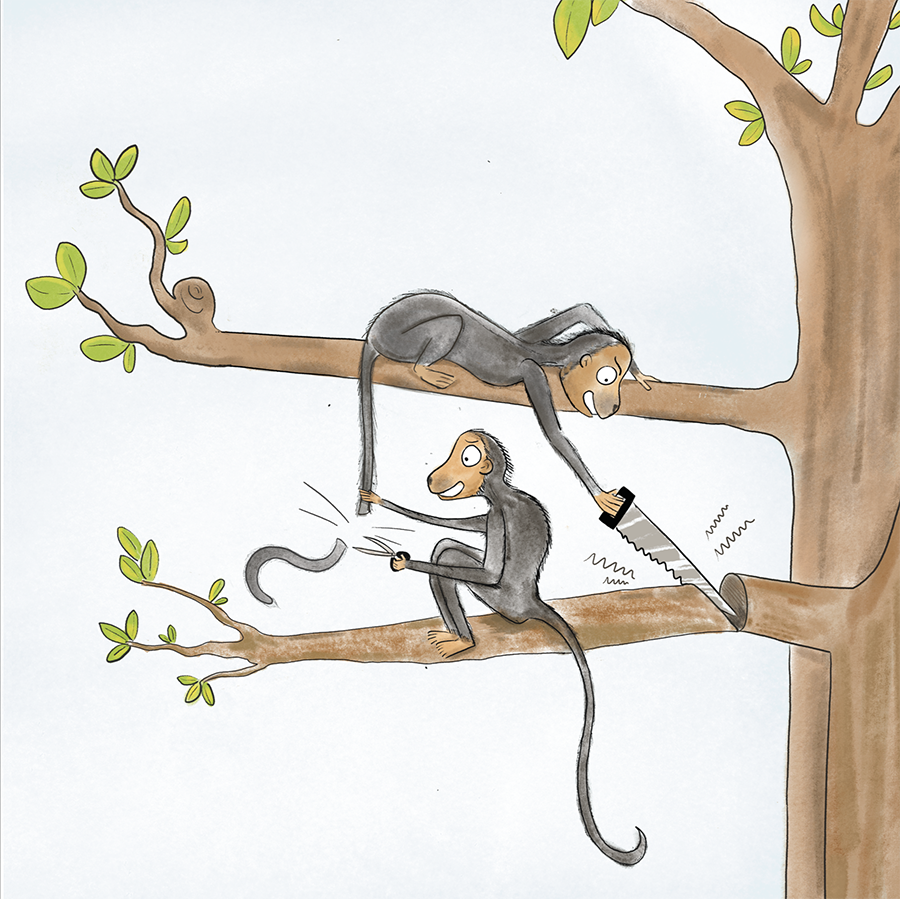
“Hand-illustrated by M.Des student Bhavna Ghanta for the English idiom ‘Tit for Tat’.” – Course // Idea Representation
AI tools, like the scissors in the image, may seem helpful, giving quick and neat results. To novices, they might even appear fast and clean at first glance. No wonder they are slowly improving and getting closer to what we desire. But in the long run, they should not replace our ability to think independently and critically. When we as designers surrender our thinking to tools, we risk becoming quick solution seekers rather than problem solvers, cutting off the very branch we sit on.
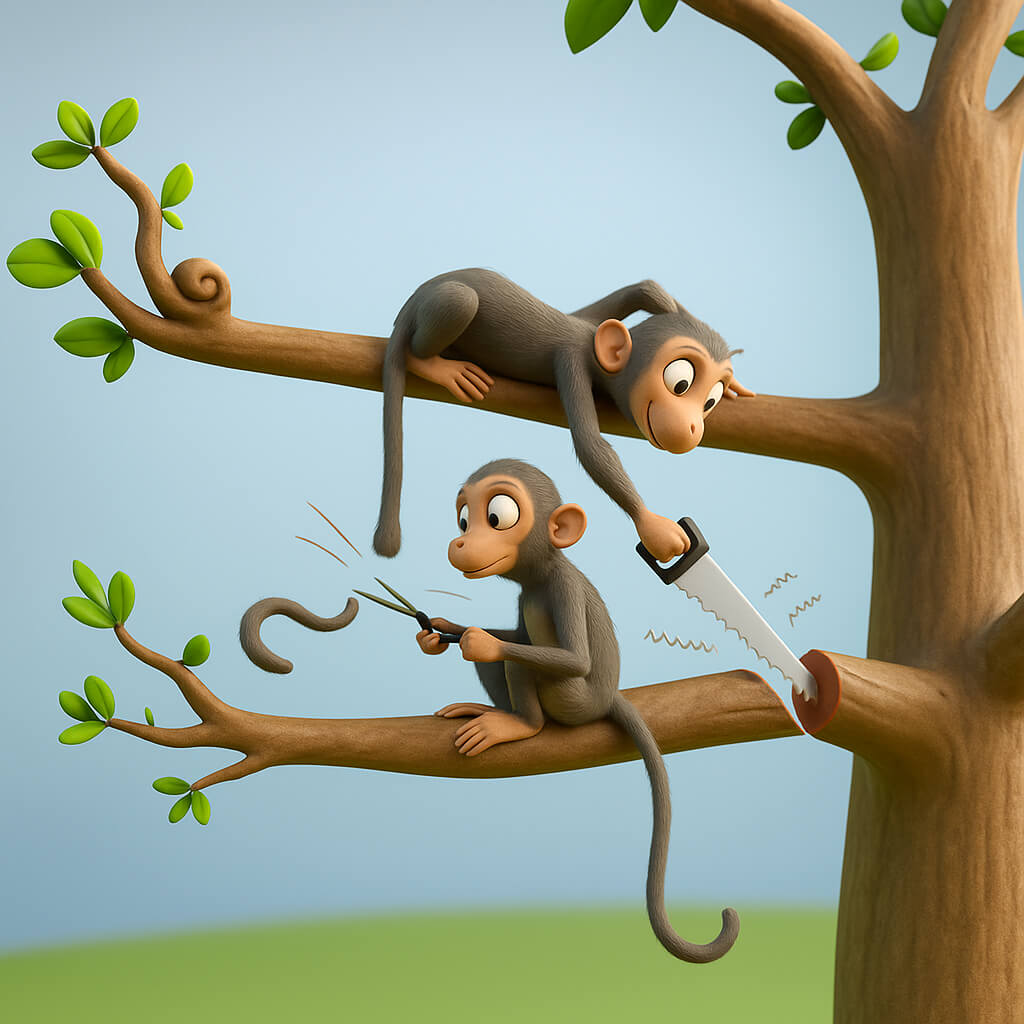
“Generated by ChatGPT 5 with the reference image. The subtle details needs to be looked into , the bottom monkey holding the scissors in hand, the details of the grip, not holding the tail.
“AI, the Internet, and the Designer’s Mind: Navigating Inspiration and Dependence”
Abstract
As artificial intelligence-generated content (AIGC) (Lou, 2023) become increasingly integrated into design workflows, their role in shaping communication design pedagogy must be examined. This research explores how students’ reliance on the internet influences their creative process, from idea generation to execution, and how AIGC tools interpret prompts to generate visuals.
In a design education assignment, master’s students in communication design illustrated an idiom’s literal (denotative) and figurative (connotative) meanings. Initially, students were instructed not to use AIGC tools for image creation. However, they searched the internet and ChatGPT for verbal explanations of idioms, often encountering visually described examples that influenced their work, sometimes directly shaping their final illustrations. Consequently, some student solutions became variations of the references they found.
Findings suggest that students view external references whether from traditional searches or AIGC tools as integral to their design process. Rather than perceiving reliance on such sources as a limitation towards independent thinking, they regard it as a source of inspiration.
In the second phase, students described their illustrations in prompts to AIGC tools, which generated visual representations for comparison. None of the AIGC outputs fully met students' expectations, failing to deliver the intended representation, though students acknowledged their superior rendering quality. Results varied based on students’ ability to craft effective prompts and the AIGC tools used. Engaging with AIGC at a later stage enabled students to critically assess its role as an execution aid rather than a solution provider.
As AIGC tools advance, their influence on design education may deepen, raising concerns about increased dependence, cognitive offloading, and shifts in conceptual thinking, potentially reshaping the creative process itself.
In a design education assignment, master’s students in communication design illustrated an idiom’s literal (denotative) and figurative (connotative) meanings. Initially, students were instructed not to use AIGC tools for image creation. However, they searched the internet and ChatGPT for verbal explanations of idioms, often encountering visually described examples that influenced their work, sometimes directly shaping their final illustrations. Consequently, some student solutions became variations of the references they found.
Findings suggest that students view external references whether from traditional searches or AIGC tools as integral to their design process. Rather than perceiving reliance on such sources as a limitation towards independent thinking, they regard it as a source of inspiration.
In the second phase, students described their illustrations in prompts to AIGC tools, which generated visual representations for comparison. None of the AIGC outputs fully met students' expectations, failing to deliver the intended representation, though students acknowledged their superior rendering quality. Results varied based on students’ ability to craft effective prompts and the AIGC tools used. Engaging with AIGC at a later stage enabled students to critically assess its role as an execution aid rather than a solution provider.
As AIGC tools advance, their influence on design education may deepen, raising concerns about increased dependence, cognitive offloading, and shifts in conceptual thinking, potentially reshaping the creative process itself.
Lou, Yongqi. 2023. ‘Human Creativity in the AIGC Era’. She Ji: The Journal of Design, Economics, and Innovation 9 (4): 541–52. https://doi.org/10.1016/j.sheji.2024.02.002.
KEYWORDS
Artificial Intelligence-Generated Content (AIGC), Design Education, Communication Design, Visualizing idioms
Note:
When calculators became common, people began relying on them even for small additions and subtractions. Over time, this dependency reduced mental agility with numbers and weakened basic arithmetic skills. It is not that calculators made people incapable, but they shifted the habit: instead of practicing mental math regularly, people reached for the device. In the same way, GPS has weakened our sense of direction and autocorrect has affected spelling. With AIGC, the risk is similar: by making creative tasks easier, it may gradually erode students’ capacity for independent thought and original idea formation.
“Sar mundate hi ole padna” (सिर मुँडवाते ही ओले पड़ना) is a Hindi proverb meaning to encounter obstacles, misfortune, or failure immediately upon starting a new task or venture. It translates to facing, “misfortune at the very outset” or “setbacks at the beginning”.
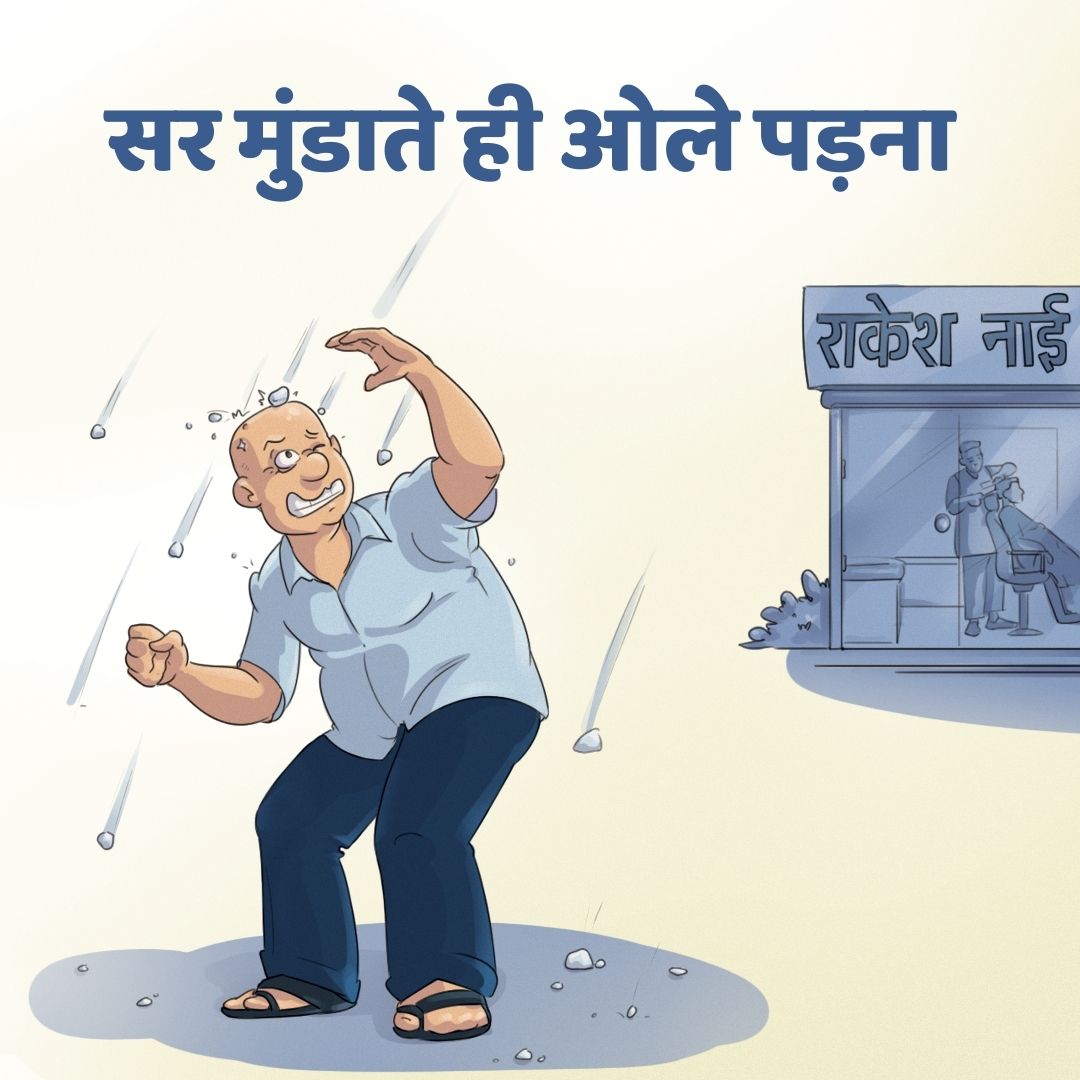
Denotation - Illustrated by Tarun (M.des Communication Design)
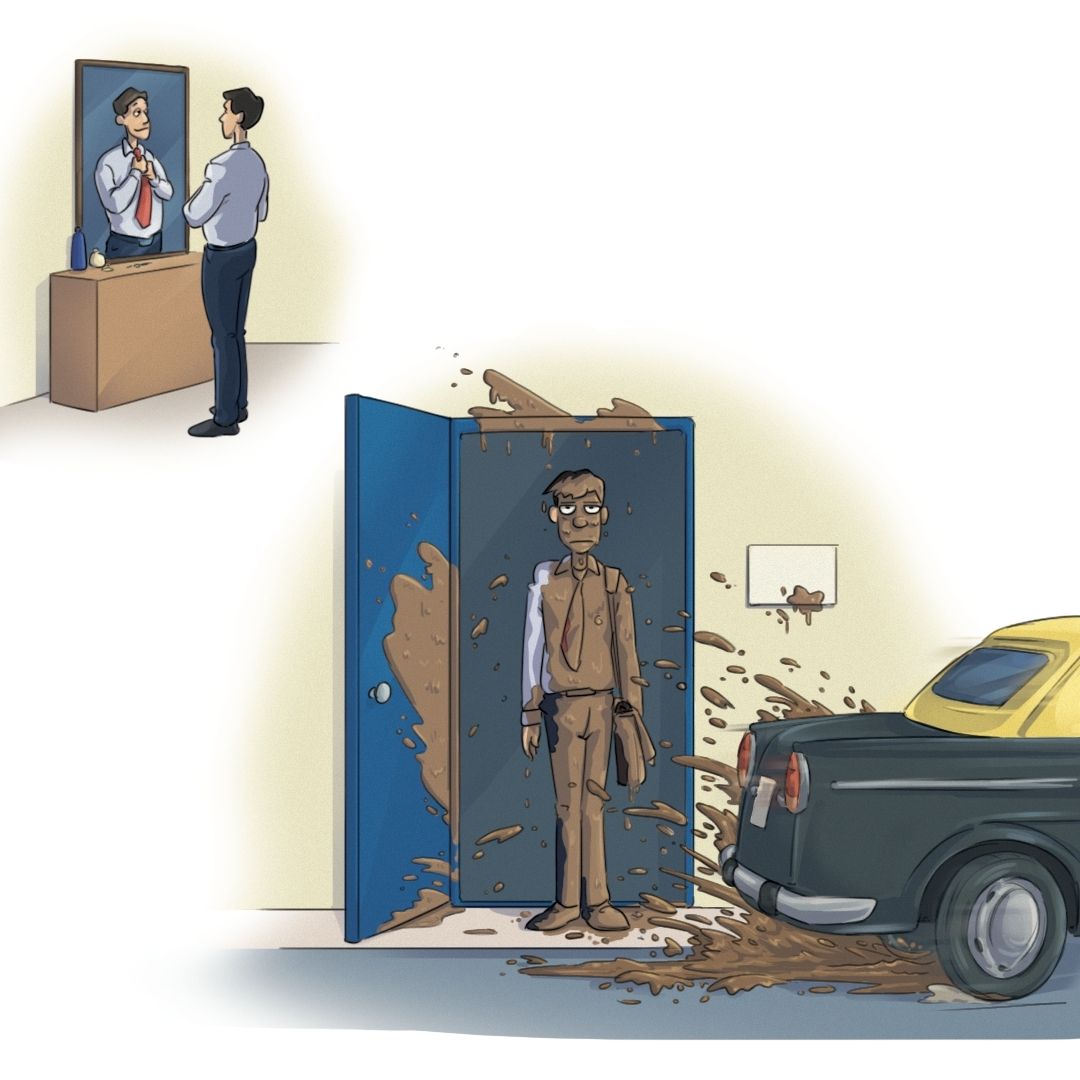
Connotation - Illustrated by Tarun (M.des Communication Design)